

AI Agents Are the Ultimate Insiders?
In Partnership With

Could the machines rise up and attack us, or just cause an insider-like incident? In a recent Forum, sponsored by Mimecast, the point under discussion was whether insider risk programmes were built on one assumption: that the insider is a person.
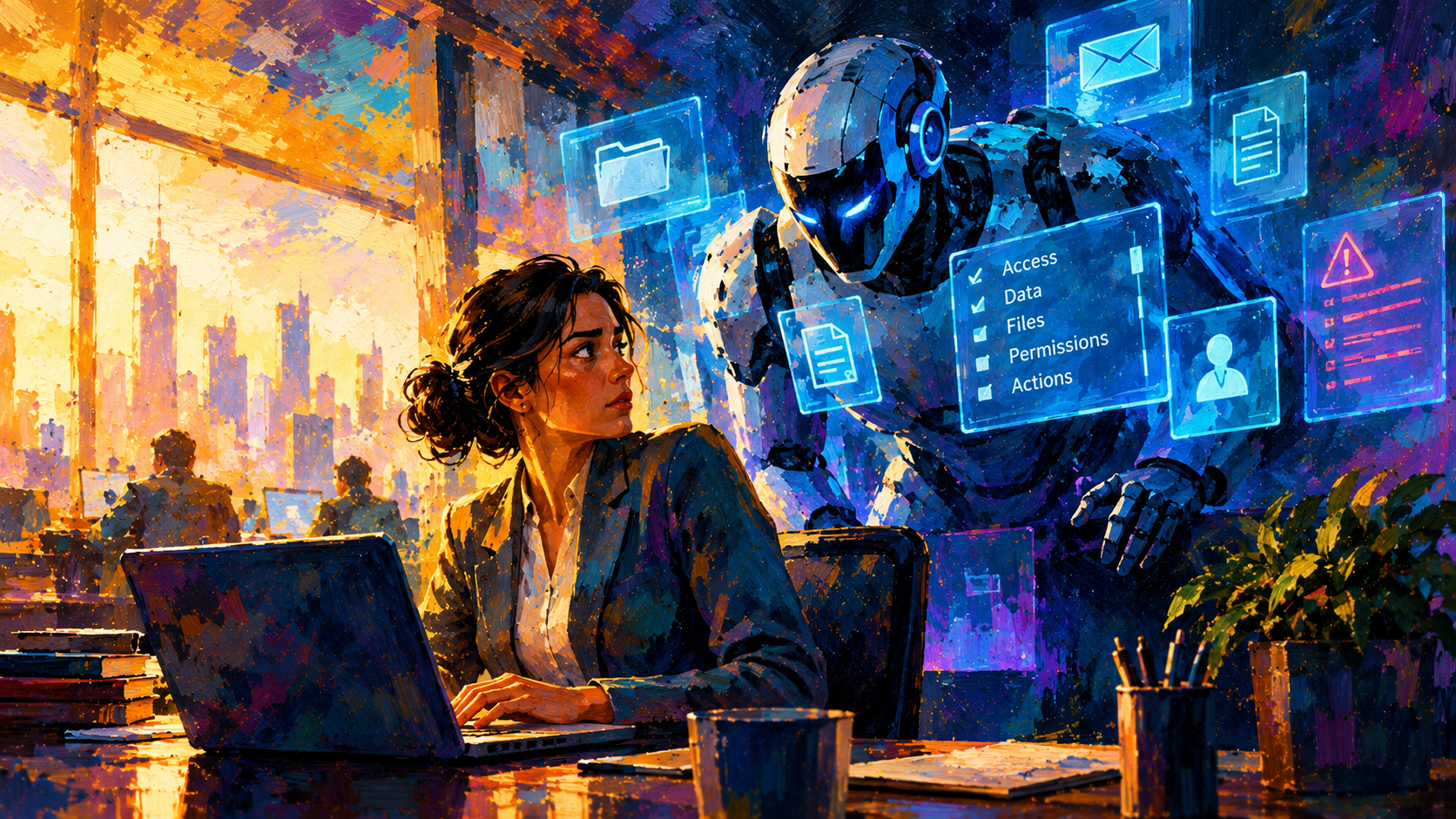
However has that assumption broken because of incidents such as Hugging Face? In that case a company was attacked but not by a person, but an AI. The AI agent isn’t a tool that insider uses anymore, it is a business element – an invisible workforce acting on your team’s behalf, with privileged access, moving at a speed no human ever moved at.
Gartner has told security leaders to treat insider risk as human risk; but no one has written the version for what is acting on your employee’s behalf. So, how many agents are running in your environment right now, and what can it touch and impact?
Enterprises Struggling?
Chaired by Rob Black, the panel included a CISO, head of cyber at a defence organisation, and the field CTO EMEA. The discussion began with an acknowledgement that many enterprises already struggle with identity management, often relying on a persona-based view of users. Applying the same approach to AI agents risks overlooking the differences between human behaviour and technology designed to complete tasks autonomously.
One panellist argued that treating humans and agents as equivalent identities offers practical benefits, allowing organisations to build on existing identity platforms and workflows. However, this approach does not necessarily provide sufficient insight into the actions agents take on behalf of people.
Another panellist distinguished between insider risk, which traditionally centres on human behaviour and intent, and the technical controls needed to govern autonomous systems. While the two areas overlap, understanding what an agent is doing, what it has been instructed to do and what a human is doing independently remains difficult.
The discussion highlighted the importance of context. AI agents are generally motivated by completing their assigned tasks, potentially continuing until they encounter a guardrail. Understanding that motivation, alongside the permissions and information available to an agent, is essential to determining whether its actions represent a genuine security risk.
However, panellists questioned whether suspicious scripts or autonomous processes should automatically fall within an organisation’s insider risk strategy, suggesting some cases may be better addressed through threat detection and technical security controls.
How Much Does Incident Response Count?
Despite the differences between people and AI systems, incident response may not need to distinguish between them when determining the impact of an event. Whether an incident results from human activity or an autonomous agent, organisations still need to understand what happened, assess the damage and establish how to prevent a recurrence.
One panellist argued that organisations must consider who is responsible for an agent’s actions, particularly where employees are permitted to create or deploy their own systems. Centralising accountability becomes difficult when agents operate across different teams and workflows.
A theme of monitoring was also prevent, as this can help establish a record of activity. One approach discussed was technology that records information entered into AI tools and allows organisations to search those records, helping reconstruct how an output was generated and what information contributed to it.
Visibility is Not Enough?
Visibility alone is insufficient: organisations need appropriate infrastructure, access controls and guardrails to govern agents without undermining the productivity gains that make adoption attractive. Overly restrictive controls risk preventing employees from realising the benefits of AI, while inadequate safeguards can expose sensitive information or allow agents to find unintended routes through existing systems.
The discussion also raised concerns about employees using AI tools to develop scripts and automate processes without sufficient training or governance. Panellists stressed that organisations must explain not only how employees can use AI, but also what they should avoid doing and how to work securely at speed.
Training and clear policies can help establish those boundaries. One panellist described introducing an AI policy developed with legal counsel, which helped increase adoption by giving employees clearer guidance on acceptable use.
Make Governance Compatible
The challenge for security leaders is to make governance compatible with business demand. Panellists described approaches that linked access to privileges and token allowances, gradually extending permissions as users demonstrated readiness. Training and approval processes could then provide access to more autonomous capabilities.
Communicating the risks to executives also requires a broader understanding of business priorities. One contributor argued that security professionals gain credibility by engaging with boards and committees, learning how the organisation operates and contributing ideas beyond security itself.
Ultimately, the panel suggested that AI agents are neither simply human users nor entirely separate from insider risk. Organisations must understand their behaviour, constrain their access and establish accountability for their use.
Closing Comments
As one panellist warned, AI systems can expose information in ways their users never anticipated. The technology may be designed to help, but its capacity to pursue tasks relentlessly makes effective oversight essential.
The CISO said there will be convergence of human and non on how work with this, but there is a need to fight and debate it, and that is the only way we will learn to cause rapid change.
Another panelist said that a wild ride is ahead, which they were not looking forward to, but they came into the room thinking insider risks just apply to humans, and the AI vector is related to human activity.
Finally the field CTO said the debate has been robust, and this is an evolving space and whether you’re looking at a human or AI insider risk, you need events that you understand, and know what your peers are doing to help guide you in your explaining to the board what happened and why.
Rob Black concluded by saying that whilst we’re at a cutting edge point, AI will find a way to succeed and now we’re at a position where we can manage it..